
TESTED | POLARIS RANGER KINETIC ULTIMATE | First Impression | Tested | Vehicles

We finally got our hands on a Polaris Ranger Kinetic so we loaded up for a test on our cattle farm. Here's what we thought of the electric side-by-side.
We’ll be honest, there was a time not that long ago when the idea of electric vehicles taking over agriculture sounded like a Silicon Valley daydream rather than something you’d actually trust on a farm. Out here, utes, tractors and side-by-sides earn their keep the hard way, and reliability, range and grunt matter more than novelty. So when the Polaris Ranger Kinetic landed on our radar, we approached it with raised eyebrows and a healthy dose of doubt. Electric might work in cities, we thought, but paddocks, properties and proper work? We weren’t convinced.
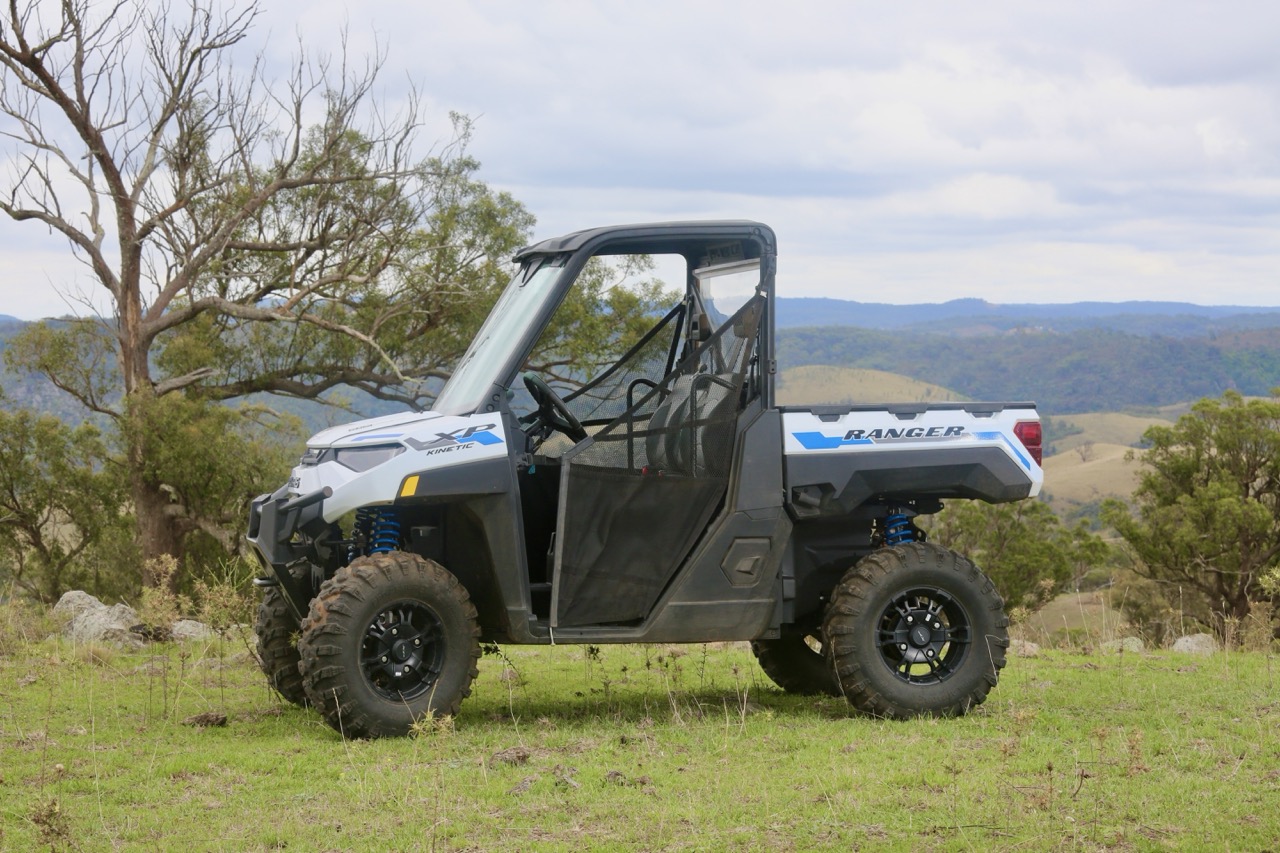
That scepticism followed us right up to the moment we climbed into the Kinetic for the first time. No engine noise, no combustion rattle, no familiar mechanical cues, just a quiet press of the throttle and a feeling that something different was about to happen. And then it did. The instant torque hit, the Ranger surged forward effortlessly, and within minutes it was obvious this wasn’t some eco-friendly compromise or niche experiment. This thing pulls, hauls and responds like a serious workhorse, just without the noise and fumes we’ve all grown used to.
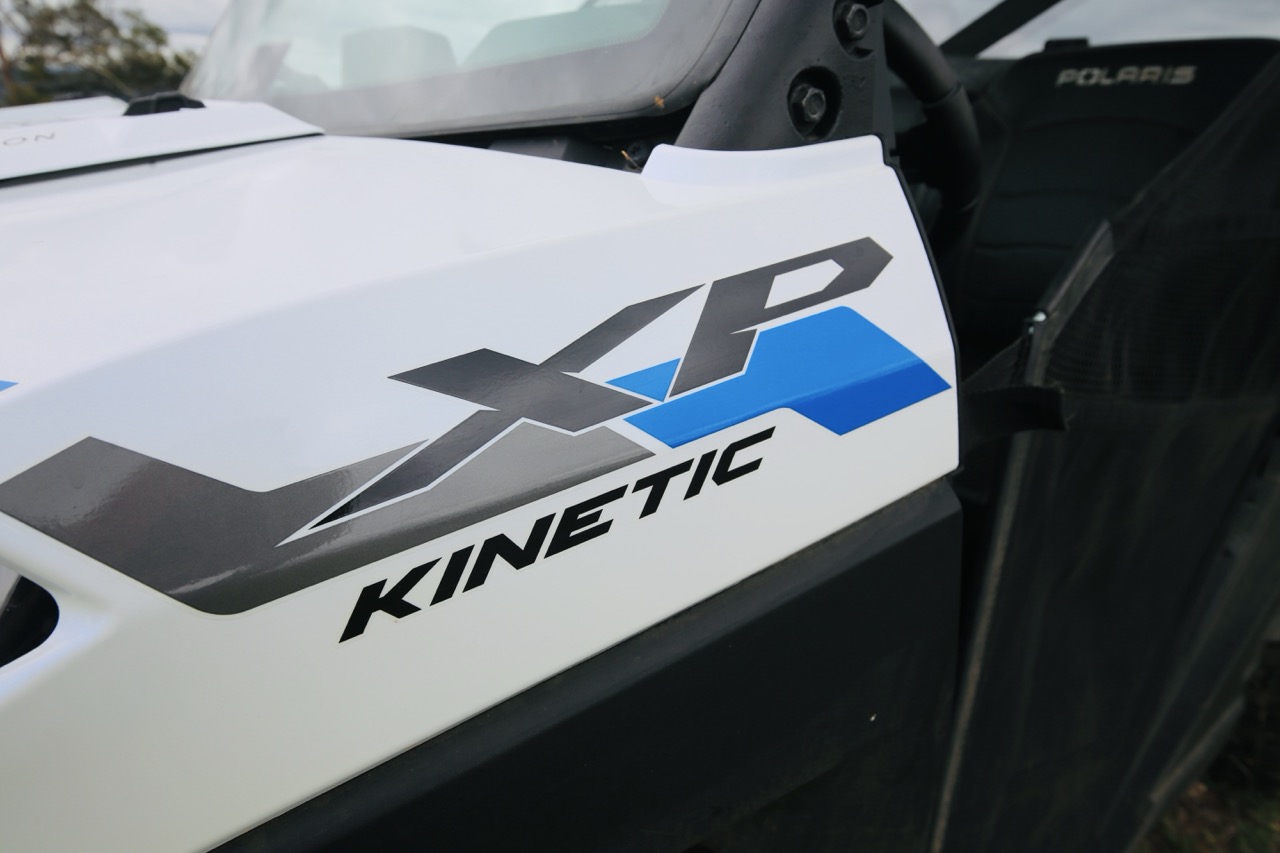
The more time we spent with it, the more our assumptions started falling apart. Tasks that normally involve revs, clutching, and noise were handled with calm precision. Creeping around livestock, hunting ferals, or hauling loads at low speed felt almost effortless. The lack of engine noise isn’t just a novelty either, it changes how you work, how aware you are of your surroundings, and how fatigue builds over a long day. Instead of feeling like an electric gimmick, the Kinetic started to feel like a smarter evolution of the side-by-side.
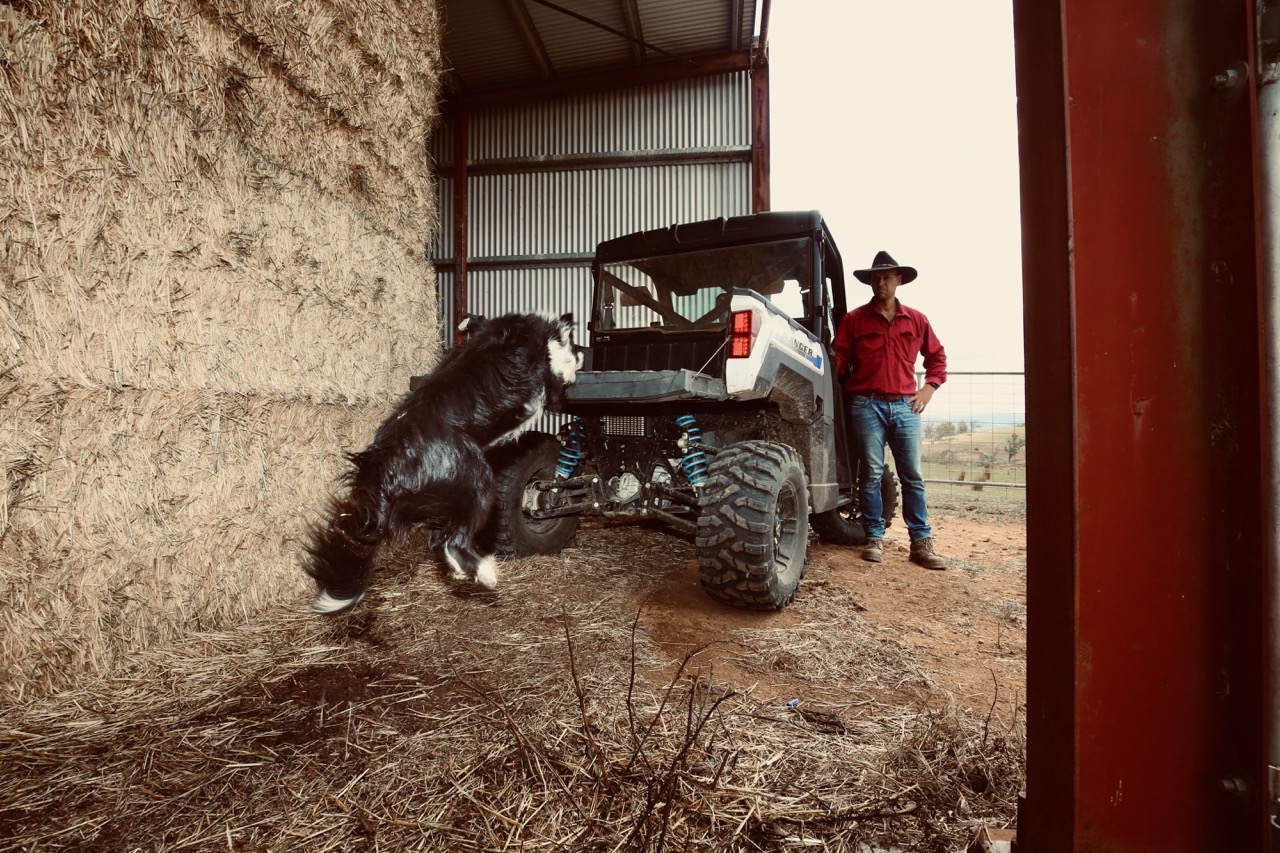
By the end of our first test, the conversation had completely shifted. This wasn’t about whether electric could work in agriculture anymore, it was about how long it will take before it becomes the new normal. The Polaris Ranger Kinetic didn’t just meet expectations, it rewrote them, and it forced us to admit something we never thought we’d say: electric might not just belong on the farm, it might actually be better for it.
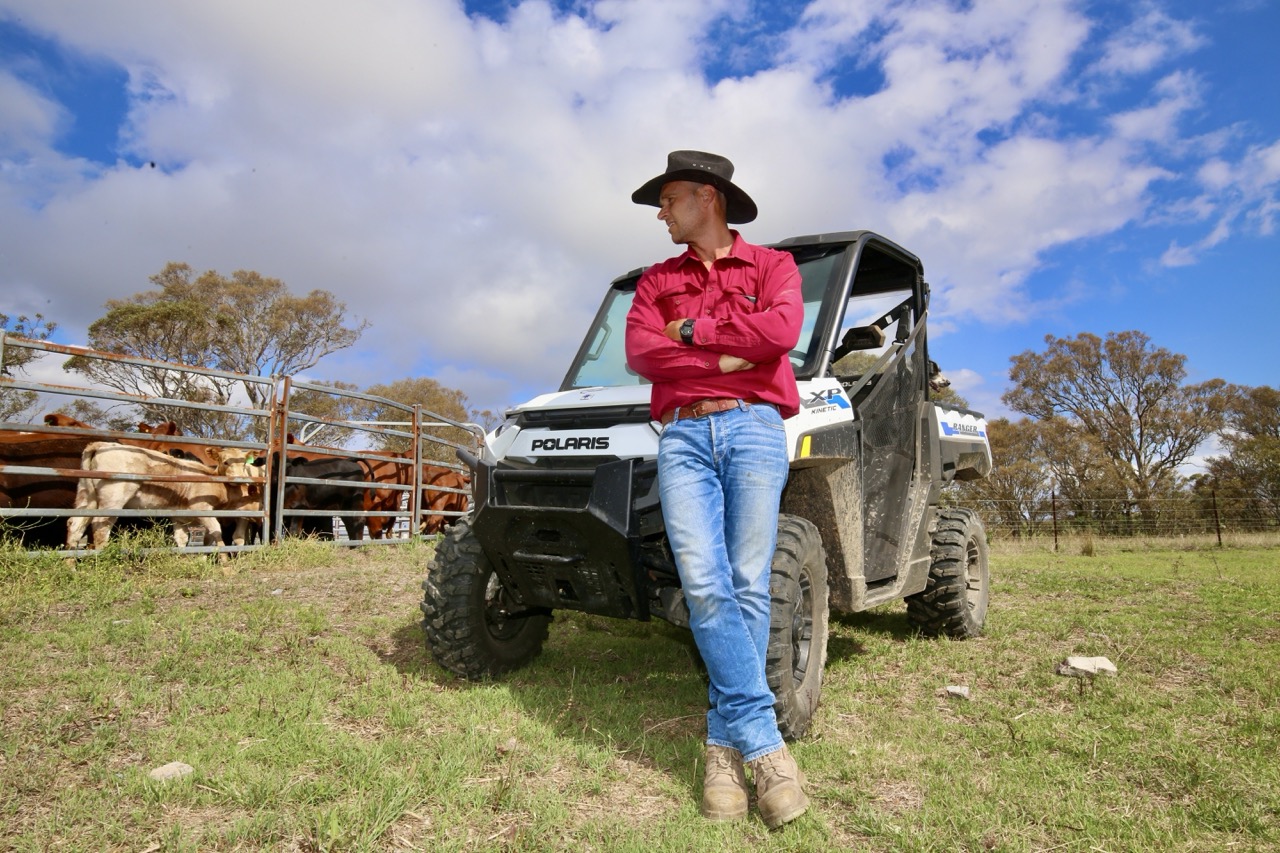
What’s in it
At its core, the Polaris Ranger Kinetic is an electric side-by-side designed to match the workload of conventional petrol and diesel utility vehicles, rather than replace them with a compromised alternative. Power comes from a 110hp electric motor producing 190Nm of torque, delivered through a belt and shaft drivetrain with selectable AWD, 2WD and turf modes. The key difference is how that power is delivered, instantly and without gear changes, which becomes noticeable in low-speed work such as towing, reversing trailers, or manoeuvring on uneven ground.
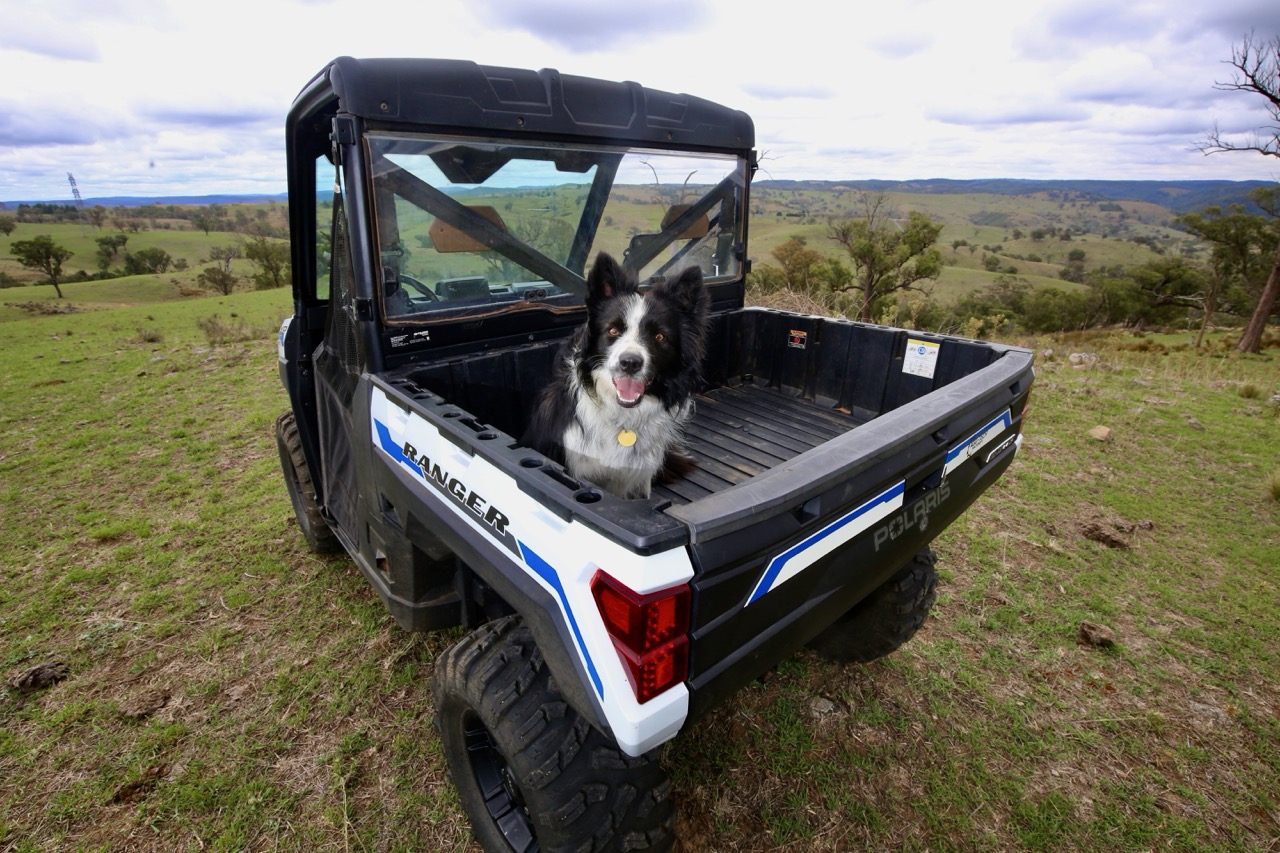
From a chassis and capability perspective, the Kinetic aligns closely with established Ranger models. Ground clearance sits at 35.6cm, suspension travel is 25.4cm front and rear via dual A-arms, and the vehicle rolls on 29-inch Pro Armor X-Terrain tyres. Payload capacity is rated at 680kg, with a dump box capable of carrying 567kg and a towing capacity of 1,134kg via a standard 5cm receiver. Full skid plates, a reinforced front bumper, and integrated winch and plough mounts indicate the vehicle is intended for regular off-road and agricultural use rather than light-duty applications.
The Ultimate variant is powered by a 29.8kWh lithium-ion battery, with Polaris estimating a real-world range of up to 120–130km depending on terrain, load and driving style. Regenerative braking is standard and contributes to energy recovery during deceleration, particularly in stop-start work environments. Charging is handled by a factory-installed 6kW onboard charger, and the vehicle is supplied with a combined Level 1 and Level 2 Type 2 mobile charging kit, allowing it to be recharged from standard outlets or higher-capacity power sources where available.
Inside the cabin, the Ranger Kinetic is fitted with a 7-inch Ride Command display that provides real-time information on battery state of charge, estimated range, power usage, regenerative braking, system temperatures and diagnostics. Additional features include electronic power steering, multiple 12V and USB power outlets, integrated speakers, LED lighting with charge indication, and a rear camera.
How does it go?
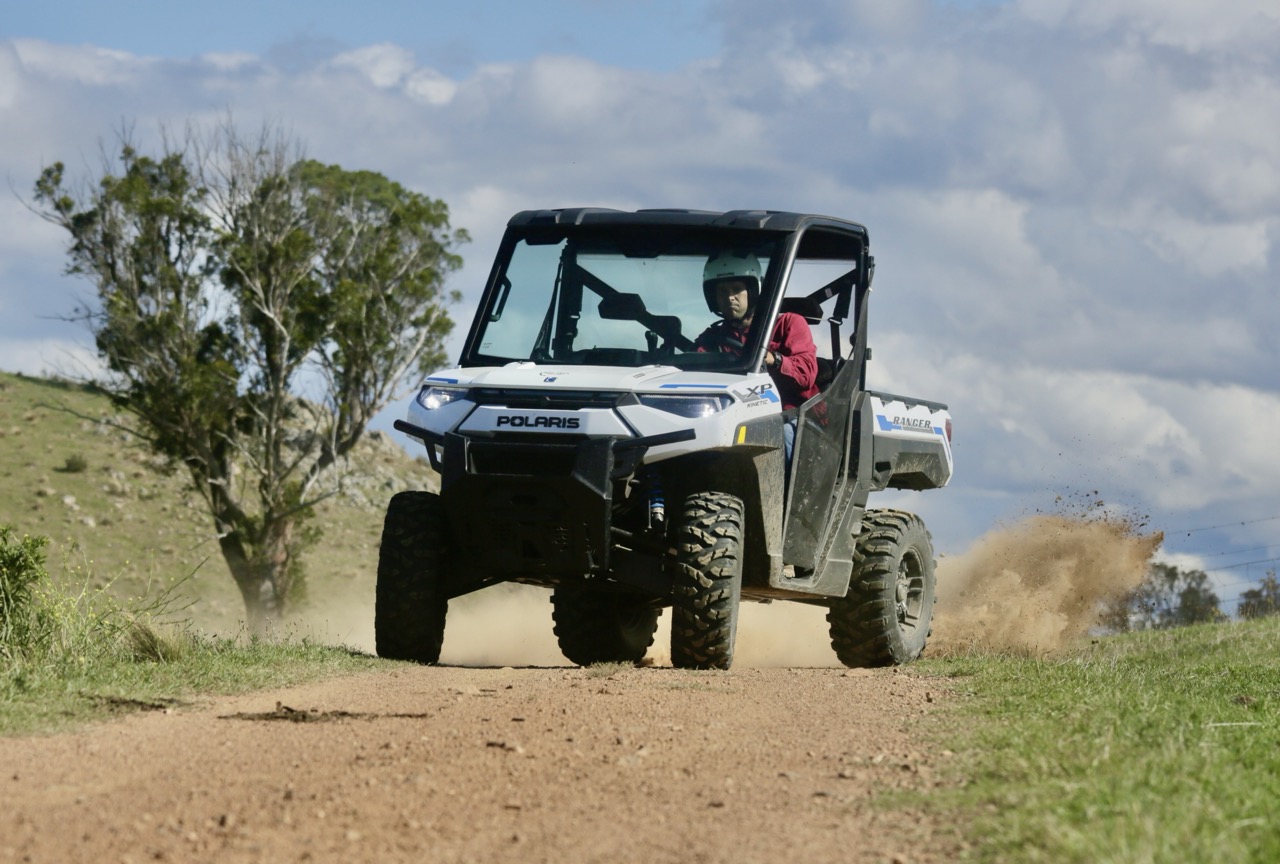
The obvious question everyone asks is about power, and the short answer is this: it’s outrageous. We’ve driven just about every agricultural side-by-side on the market, from smaller 400–500cc machines through to all the 1000cc offerings, and in terms of outright shove, this is right at the top. In Sport mode, the power delivery is instant and aggressive. Cruising along a fire trail at part throttle and then planting it sees the Kinetic leap forward hard enough to break traction and start sliding. It’s properly quick. Yes, race-spec machines like a Polaris RZR Pro R have more outright performance, but in the context of a working farm vehicle, the Kinetic has more power than you’ll realistically ever need.
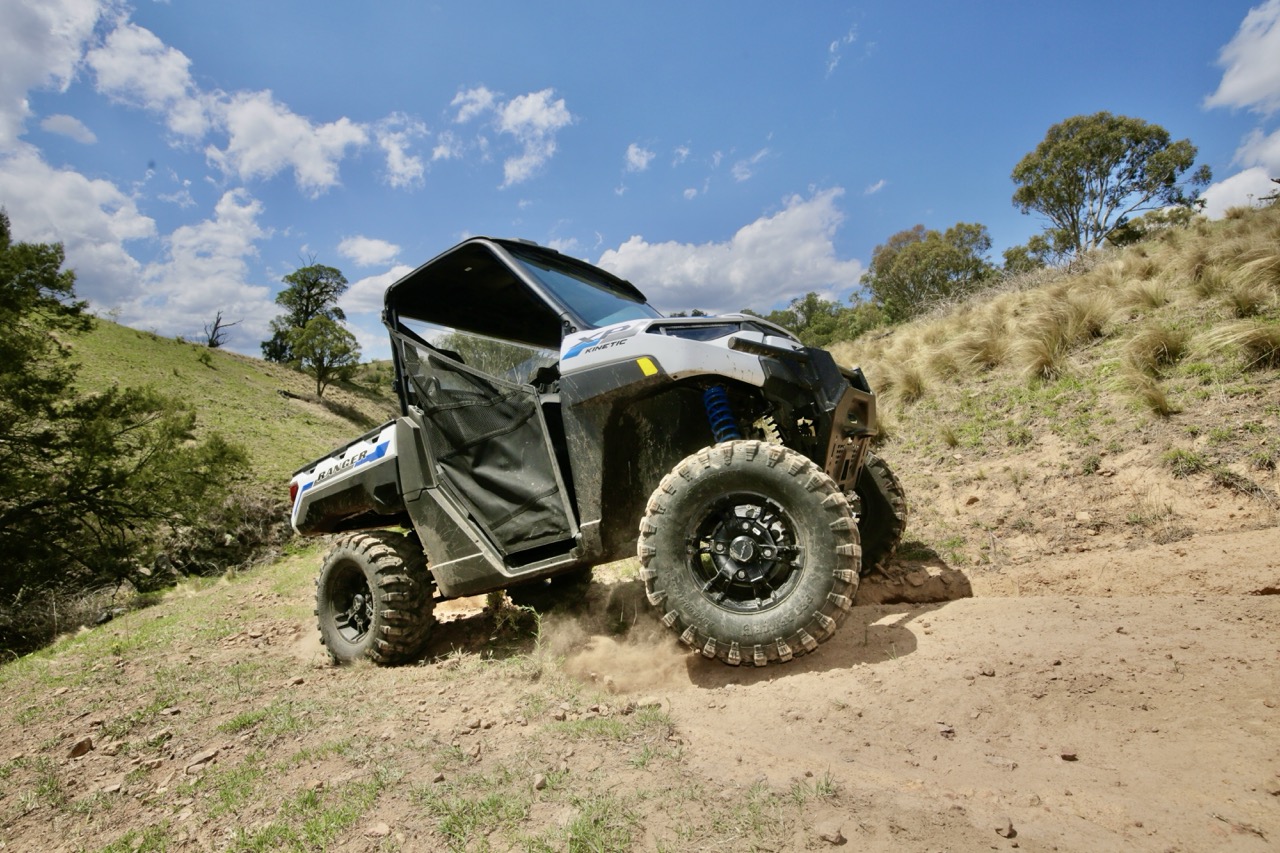
At the same time, it can crawl just as well as it sprints. We’ve spent plenty of time moving cattle and slow-moving bulls, and the Kinetic will idle along smoothly in low range without revving or making unnecessary noise. The three drive modes—Eco, Standard, and Sport—are genuinely different. In Eco, we topped out at around 65km/h, while Sport saw us reach 90km/h before backing off as the vehicle started to feel light and loose on the road. Those modes don’t just change top speed; they noticeably alter throttle response and torque delivery.
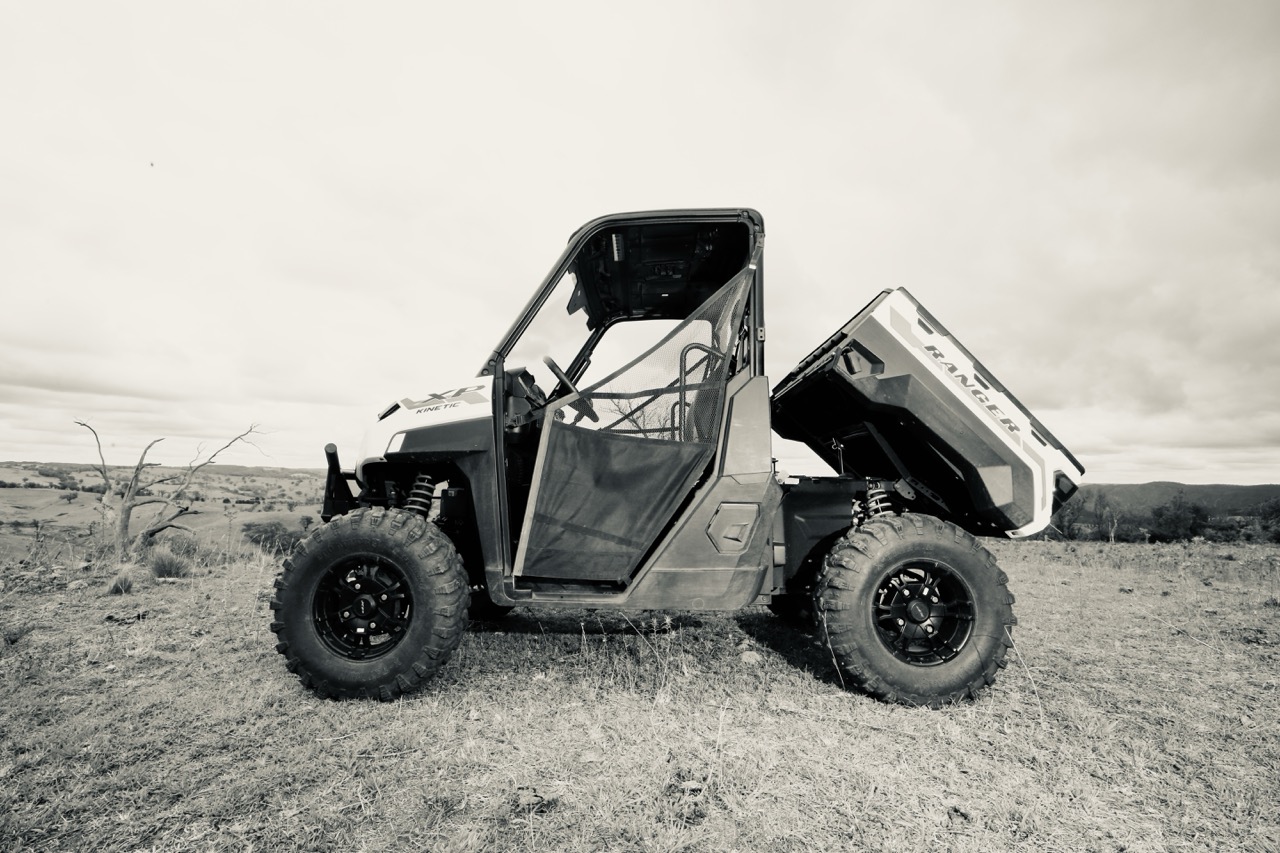
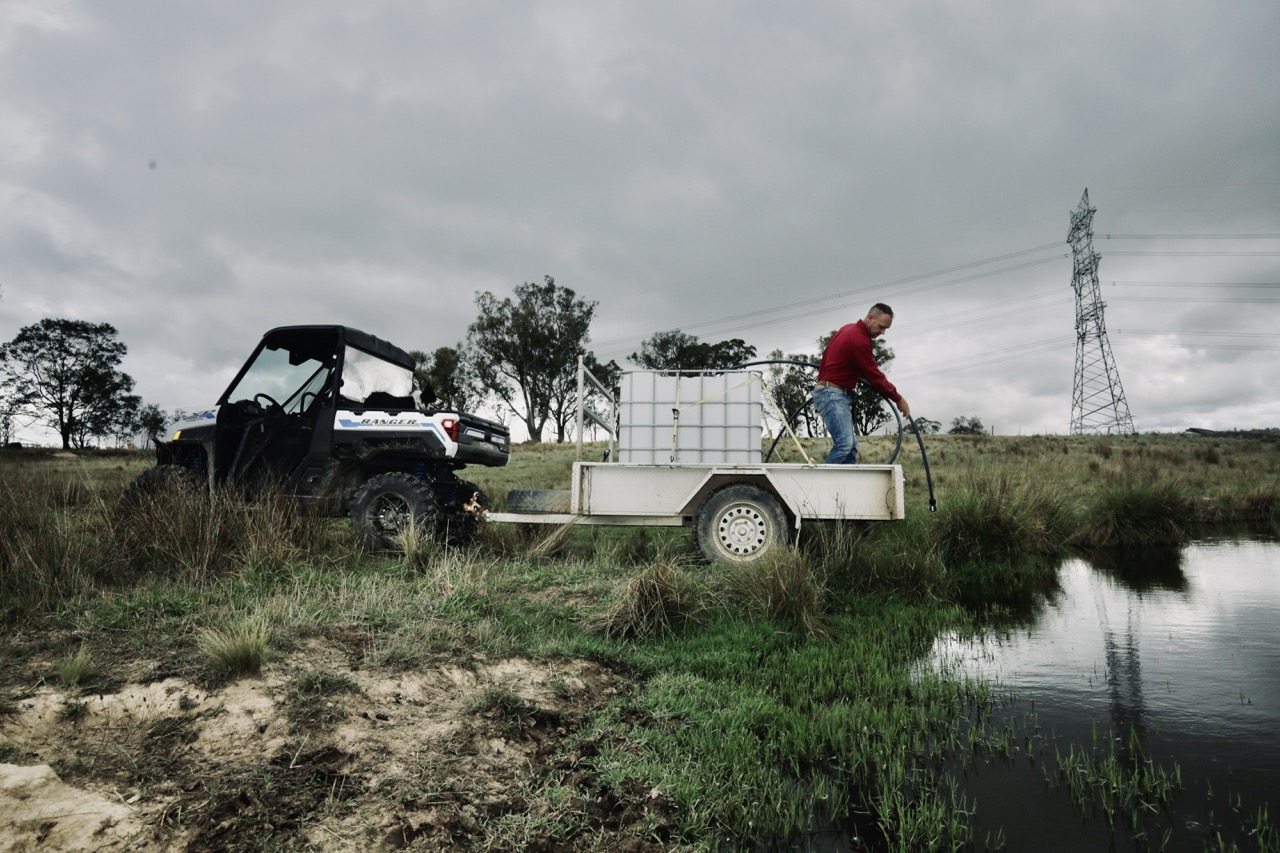
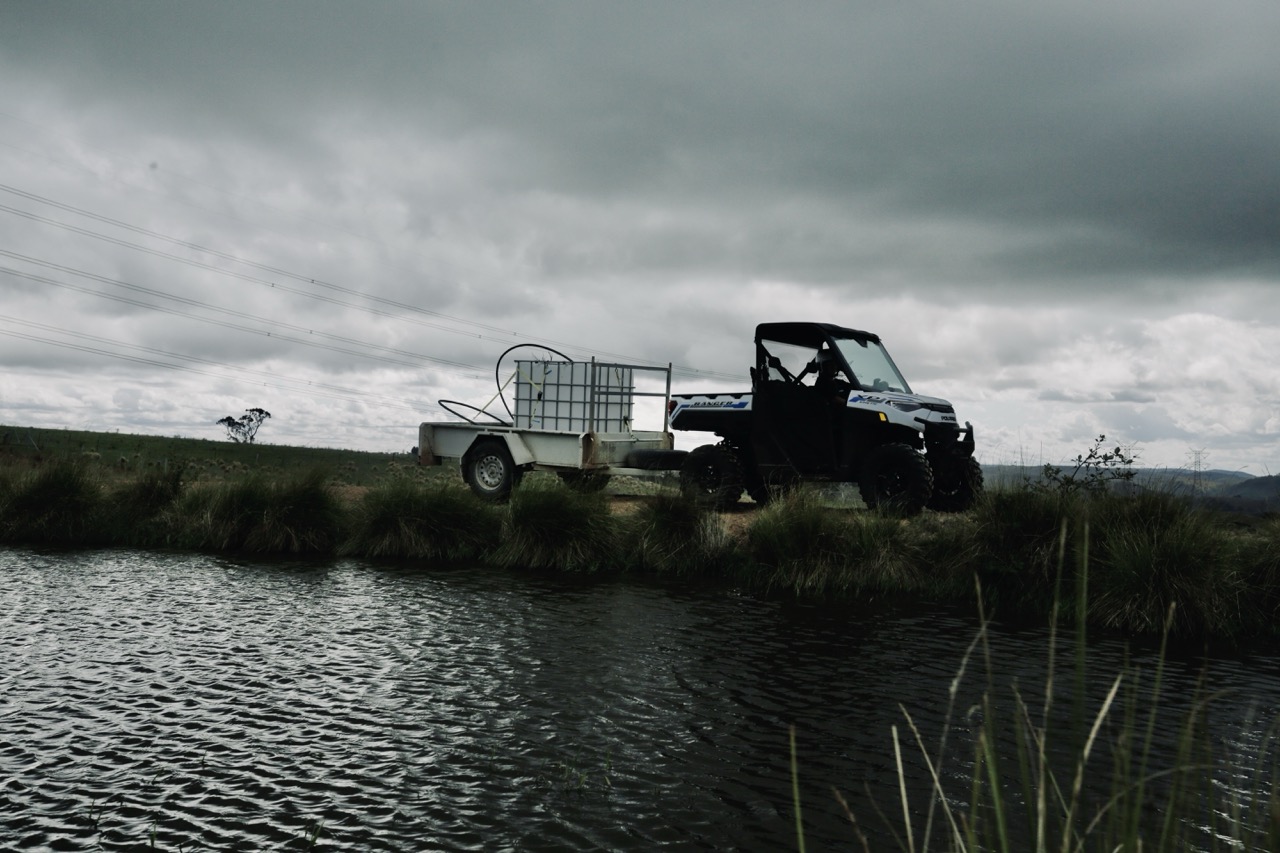
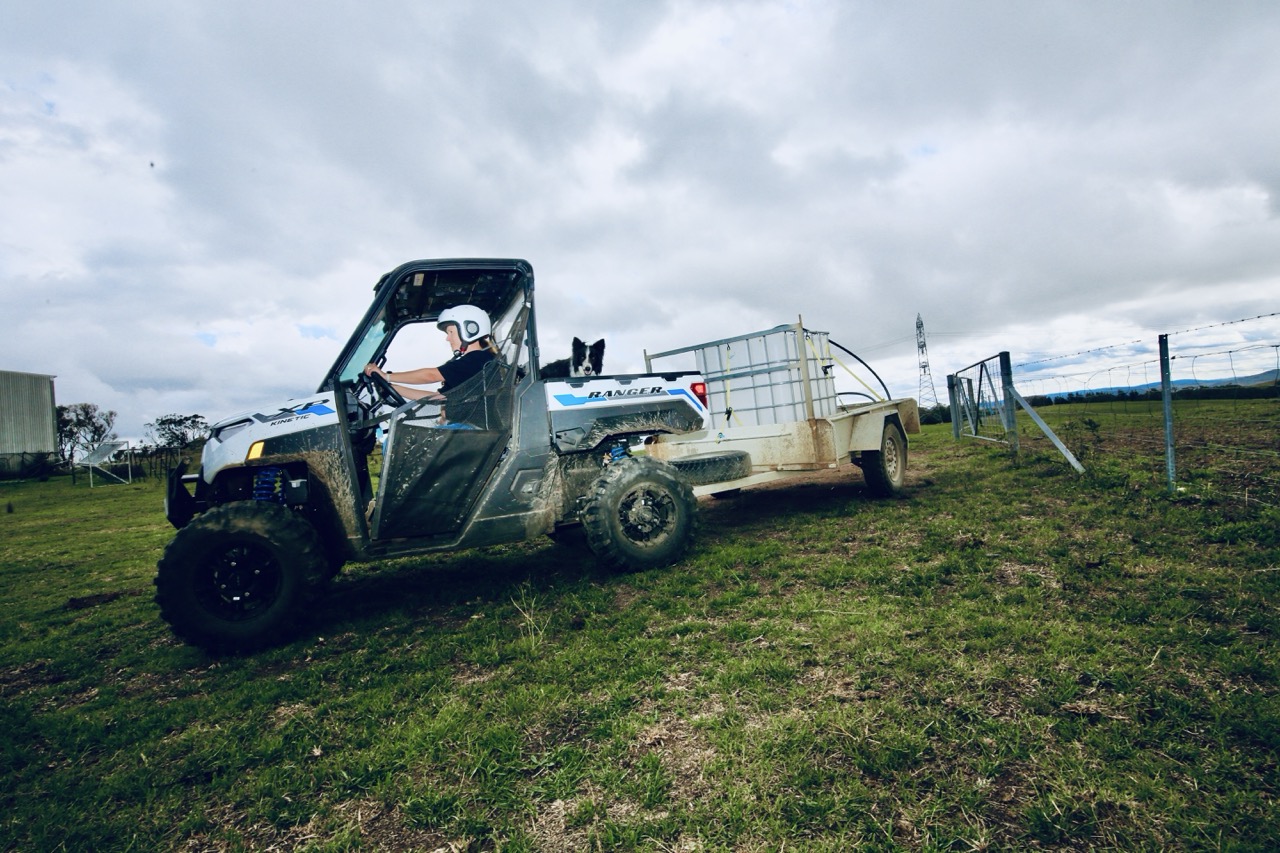
Towing was one area we were unsure about before testing, but it turned out to be a strong point. We hauled roughly a tonne while moving water containers during weaning, and once up and moving, you barely notice the load. The mid-range torque makes towing feel effortless. There is, however, a learning curve at take-off. In Eco mode especially, there’s a slight delay before the power comes in, and when it does, it can lurch forward if you’re not expecting it. The same applies in reverse. For towing work, Standard mode proved to be the sweet spot with plenty of torque without the lag.
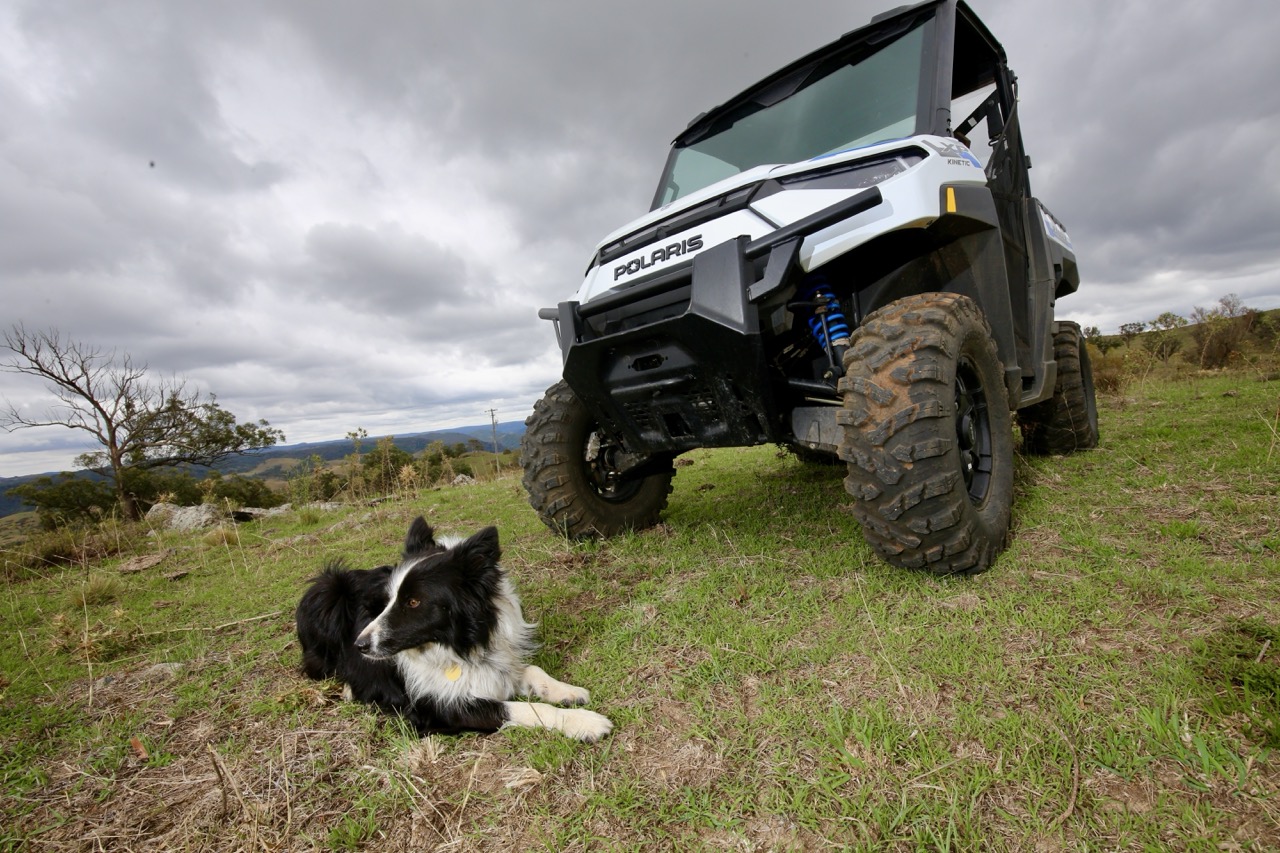
Suspension and driveline performance are exactly what you’d expect from a high-end Polaris Ranger. It uses the same basic running gear as the petrol 1000cc models and feels just as capable. Holes, rocks, logs? None of it fazes the Kinetic. Four-wheel drive works as you’d expect, with high and low range available, and one of the standout benefits of the electric drivetrain is how quiet low range is. There’s no engine revving or drivetrain noise, which makes it far less stressful when working around livestock.
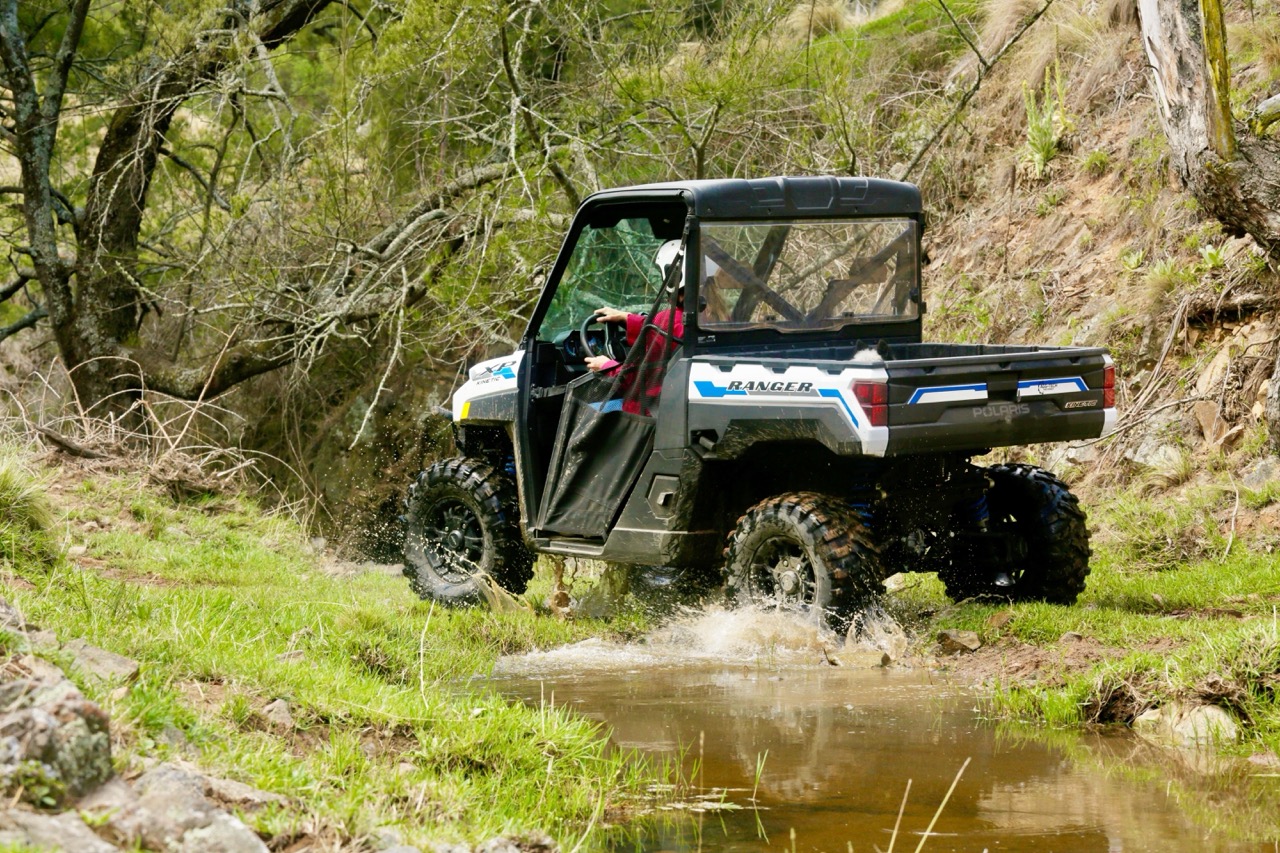
The transmission setup initially looks odd for an electric vehicle, but it works extremely well. You select high or low, then use a forward/reverse toggle. That toggle is excellent, it’s quick, intuitive, and far easier than juggling a traditional gear selector where it can be hard finding forward or reverse gears. It’s so good that we’d love to see Polaris adapt it for their petrol models.
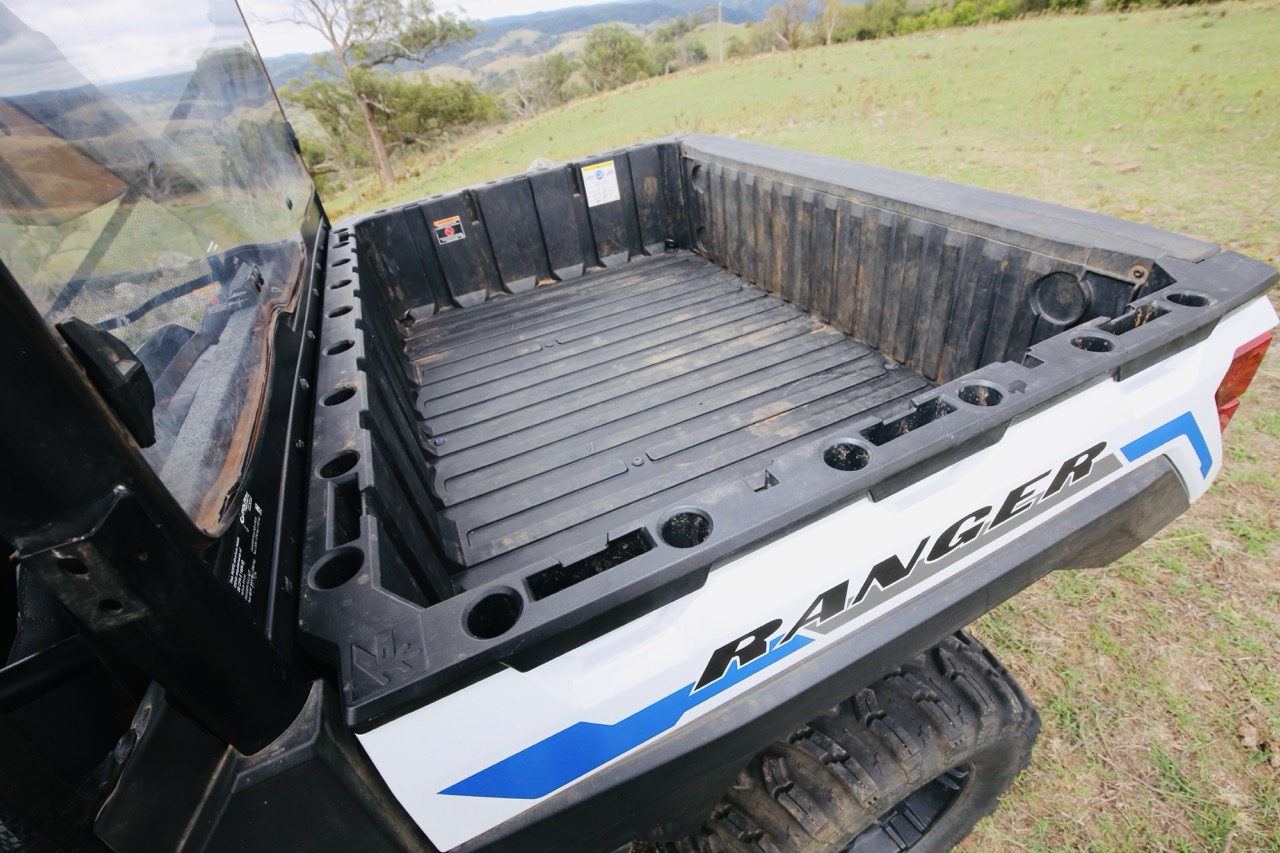
Comfort is strong. It’s easy to sit in all day, there’s plenty of space in the tray, and the ground clearance inspires confidence across rough paddocks. The lack of noise also means you can run the radio or listen to a podcast without cranking the volume, which sounds trivial but makes long days more pleasant.
Range is the big unknown everyone wants answers on, and we’re still testing that properly. So far, we’ve covered around 50–60km and still had 40% battery remaining, using a mix of Eco, Standard, and Sport. Based on early use, we’d estimate up to 100km in Eco mode on flatter ground, and closer to 70–75km in Sport if you’re driving hard. We’ll be doing a full drain test soon to confirm those figures. Charging, however, is something you need to stay on top of. Polaris quotes around five hours, but using standard 240V power in our shed, it took closer to 12 hours. Forgetting to plug it in overnight could easily derail a workday.
Our only other gripe is the door setup. Like many standard side-by-sides, it comes with netting rather than solid doors. Proper doors would be a worthwhile upgrade as they’re more comfortable, quicker for opening gates, and better protection from weather and debris.
Overall, the Polaris Ranger Kinetic has surprised us. The power is immense, the ride quality is excellent, towing capability is strong, and the silence fundamentally changes how you work around stock. Range and charging require some planning, but for a full day’s work, it’s proven more than capable so far. We’ve got wet-weather testing, towing tests, range testing, and even hunting use planned over the next year but as an initial assessment, this thing has seriously impressed us.
